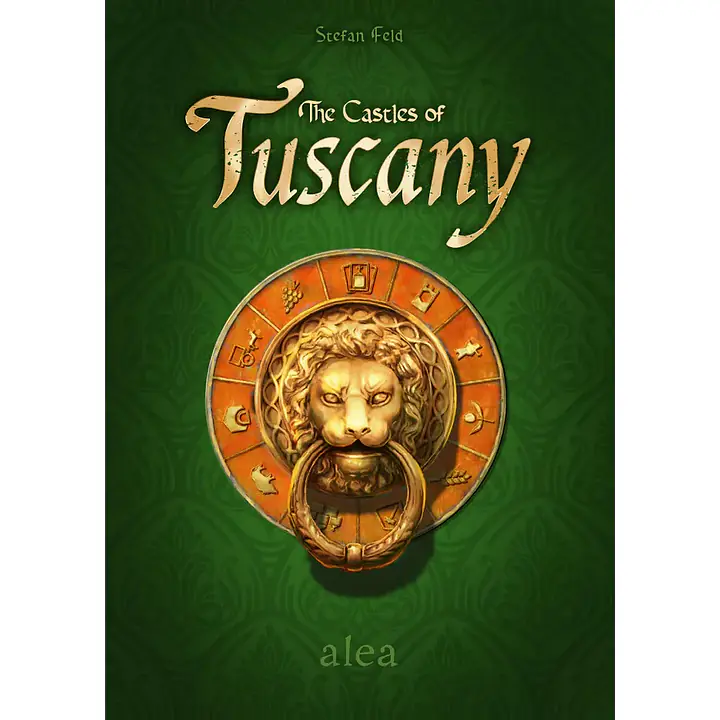
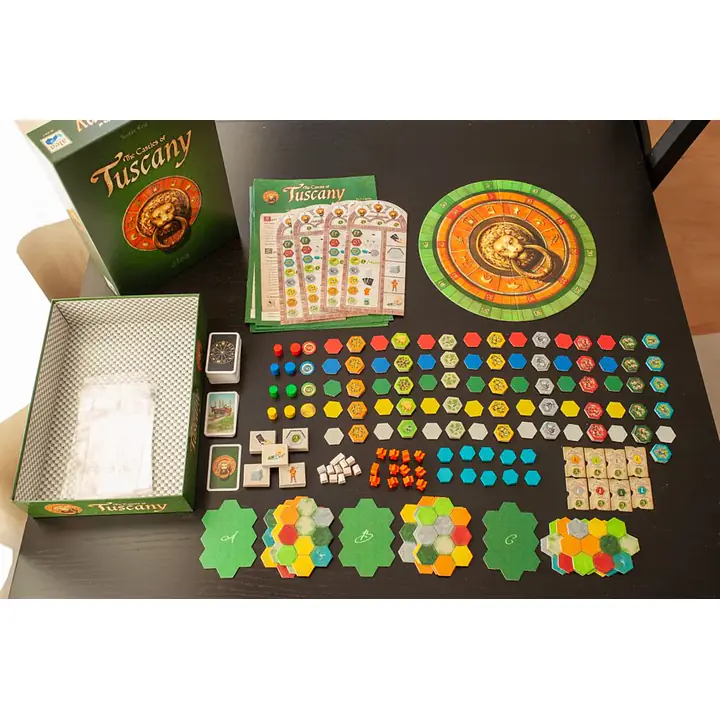
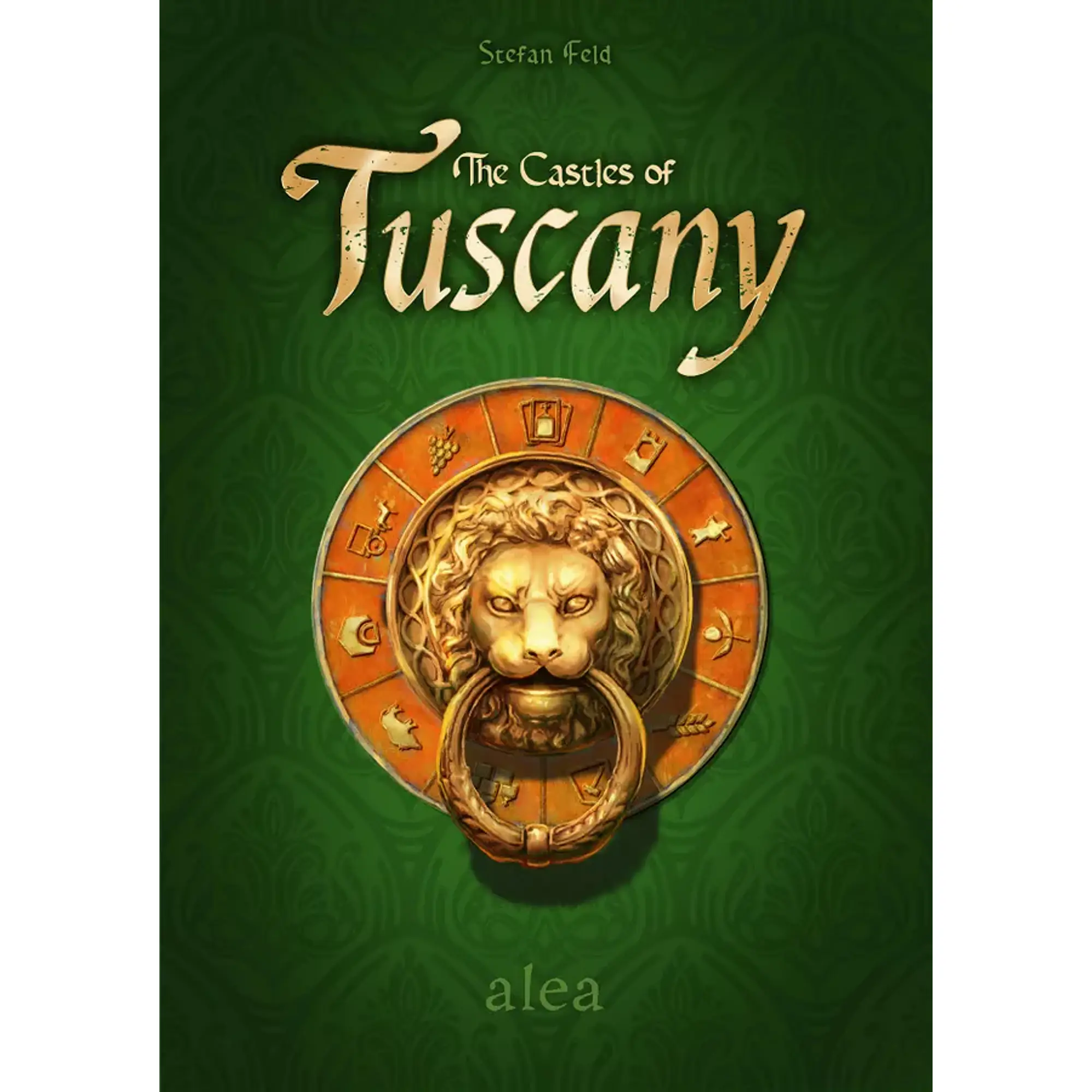
The Castles of Tuscany is set in 15th‑century Renaissance Tuscany, where players take on the roles of influential princes developing their territories into prosperous regions. By supporting towns, villages, and monasteries, as well as extracting marble and delivering goods, players expand their domain and earn points. The game revolves around enlarging your territory by placing various tiles that represent the development of different parts of your region.
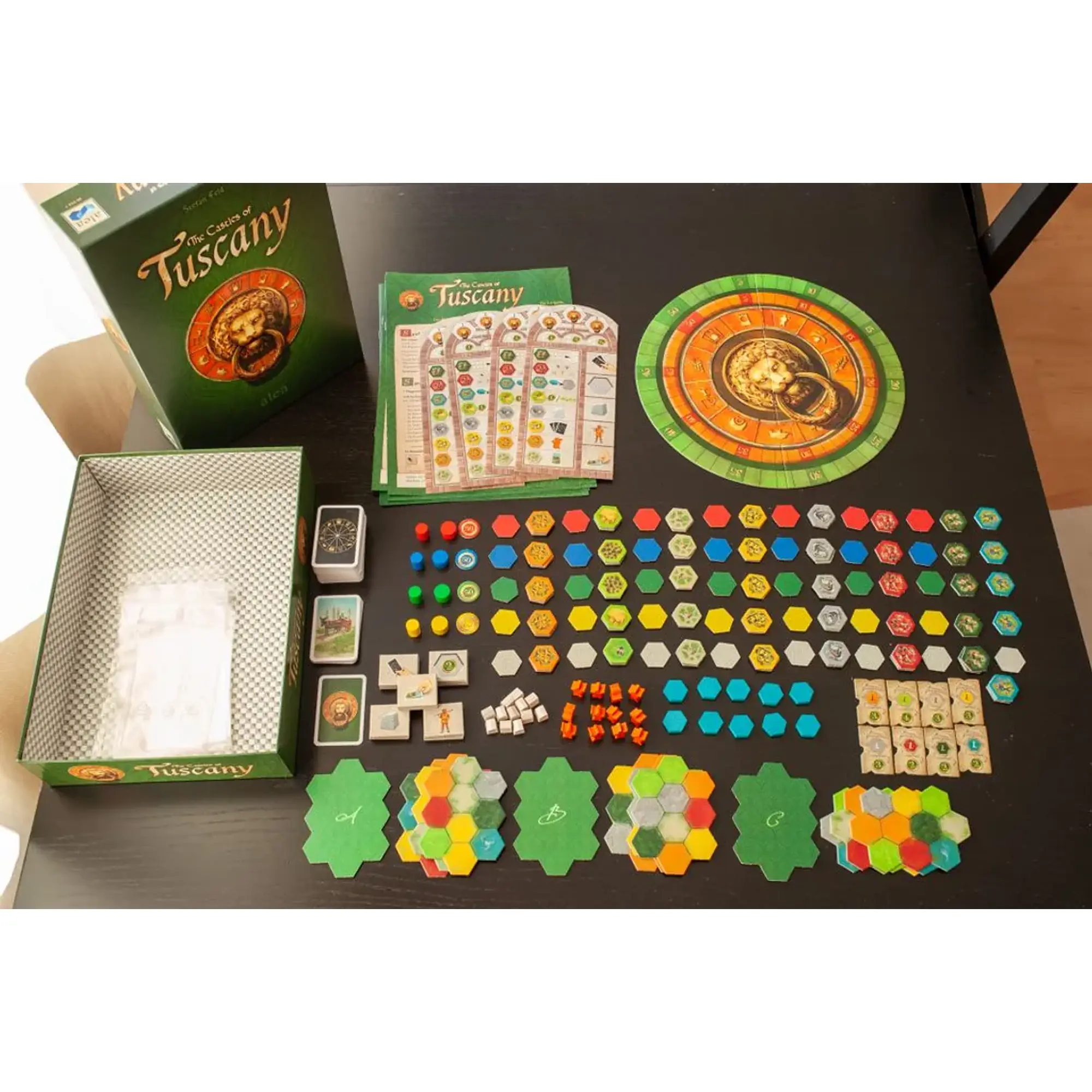
At the heart of the game is the placement of region tiles onto your personal board. Each type of tile provides a special action or bonus (e.g., additional cards, extra turns, marble, workers, or points). Each round, a player can perform one of three actions:
- draw region cards,
- take a tile from the shared supply,
- place a tile on their region (using the appropriate cards or workers).
The game is played over three rounds, each ending when a player empties their next stack of tiles.
Scoring is designed in an interesting way: points earned during the round are marked on the green track, and at the end of the round, these points are added to the red (main) scoring track. This means early points matter more, as they repeat across all three rounds. The player's board is composed of several smaller sections, allowing for varied setups between games.
This is a very streamlined and faster version of Feld’s classic eurogames, especially compared with Castles of Burgundy, meaning it offers less complexity but still plenty of strategic decisions.
The Castles of Tuscany is a fast, pleasant, and strategic experience of building a Renaissance region, offering just the right balance of combination‑building and tactical depth. 🏰