Step into the role of guides of the Quechua people, exploring an uncharted Andean valley in honor of Pachamama, the Earth Mother. Your task is to uncover different types of terrain and plant the appropriate crops while respecting the rules of natural harmony, such as diversity, regional separation, and balanced crop distribution.
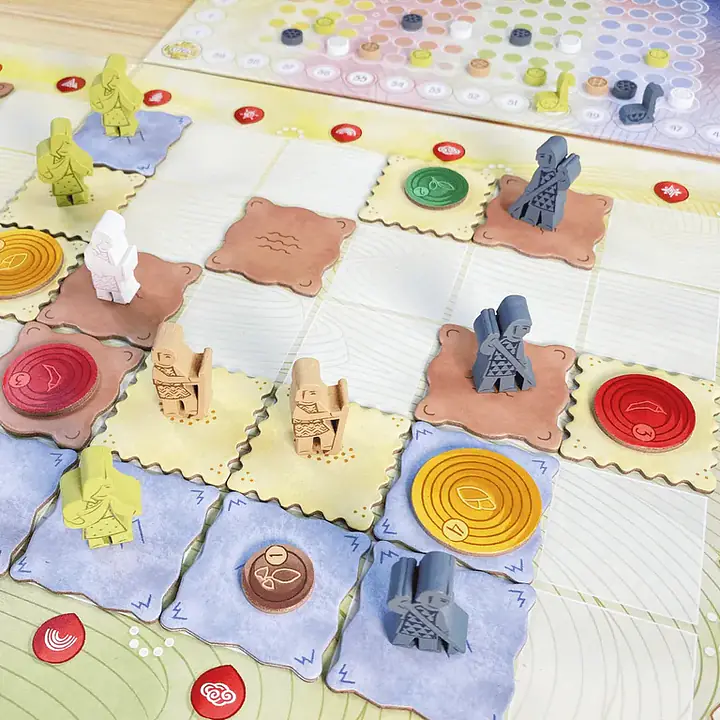
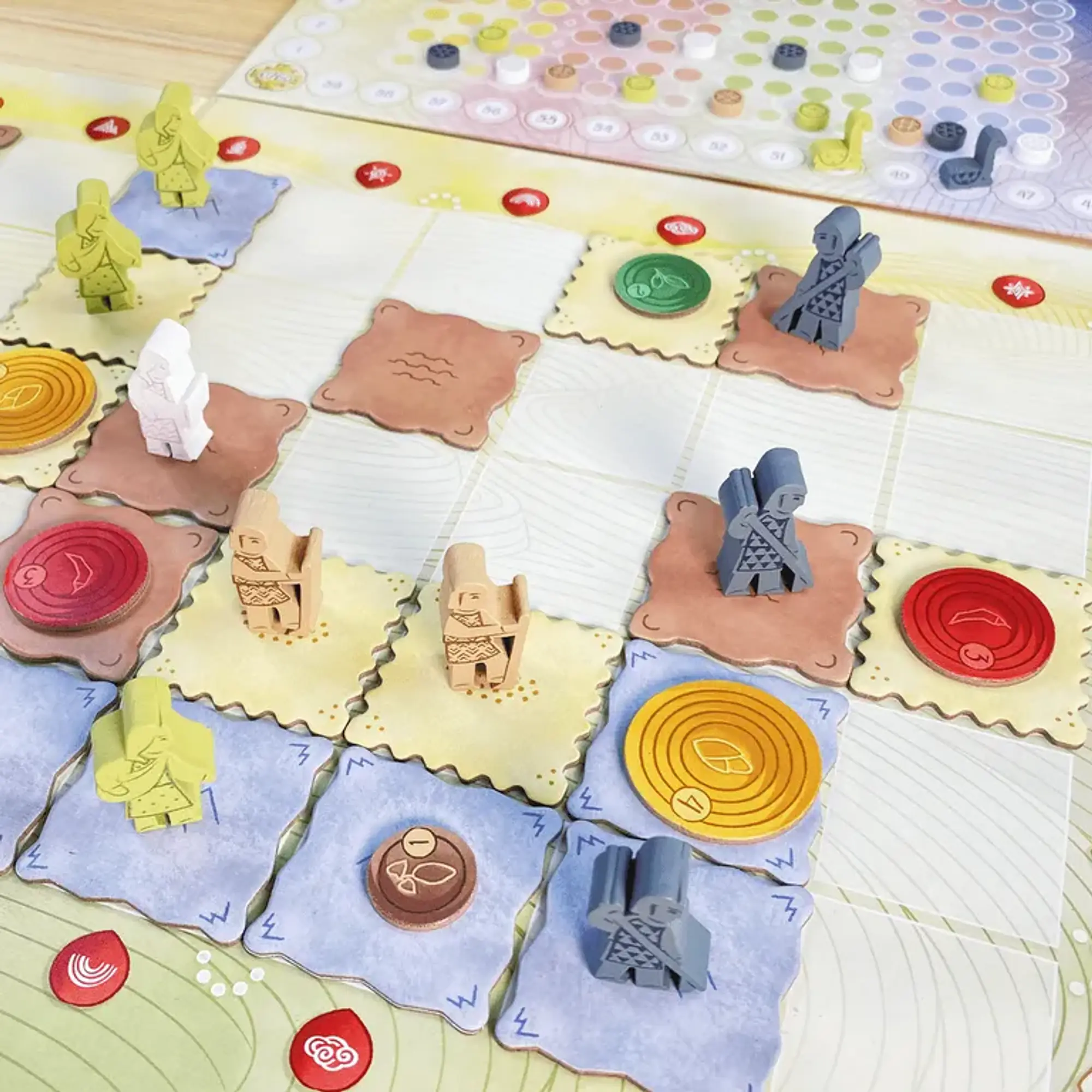
On your turn, you move one of your workers (meeples) across the central grid and then use the Pachamama Wheel to reveal the terrain type of the chosen space. When taking this action, you must deduce which crops belong in the various fields. Correct guesses earn points and allow you to place a token, while incorrect guesses result in penalties. Terrain regions range in size from 1 to 5 spaces, with each region containing numbered crops. Identical crops may not touch one another, even diagonally. At the end of each action, you may make offerings (1–5 cubes) to gain additional points, although the number of different offerings you can possess is limited. Once all terrain areas have been revealed, players take turns performing divine actions. The game continues until all terrain tiles have been used, followed by final scoring, with the player who has accumulated the most points declared the winner.
The game can be played competitively, cooperatively, or solo, increasing its flexibility and replayability through 20 different scenarios.
Tiwanaku is a sophisticated blend of exploration and logical deduction that will delight fans of strategic puzzle games.